Fish puns are the unsung heroes of the joke world. They swim under the radar at parties, they get groaned at around dinner tables, and they somehow make even the most serious person crack a smile. Whether you need a clever caption for a fishing photo, a punny name for your new betta, or just want to annoy your kids with some top-tier dad humor, you have come to the right plaice.
Quick Answer: The best fish puns rely on wordplay with common fish names (like “fin,” “gill,” “scale,” “school”) and popular phrases. Examples include “You’re fin-tastic,” “Let minnow if you need anything,” and “I’m feeling a little eel today.”
This guide is not just a random list. We are going to break down why these puns work, categorize them so you can find the right one fast, and give you the tools to write your own.
Why Fish Puns Are So Popular
There is a specific science to why we find wordplay funny, but honestly, the appeal of fish puns is simpler than that. They are accessible. You do not need to know complex history or pop culture to get a joke about a “cod” or a “tuna.” The vocabulary of the ocean is already baked into our everyday language. We talk about “schools” of thought, having a “skeleton in the closet” (or a “skull” in the fish), and feeling “crabby.”
The human brain loves pattern recognition. When you hear a phrase that almost sounds normal but has a twist, it triggers a little dopamine hit. Fish puns do this constantly. They take a phrase like “for goodness sake” and turn it into “for goodness hake.” It is unexpected, but instantly understandable.
Here are the main reasons they stick around:
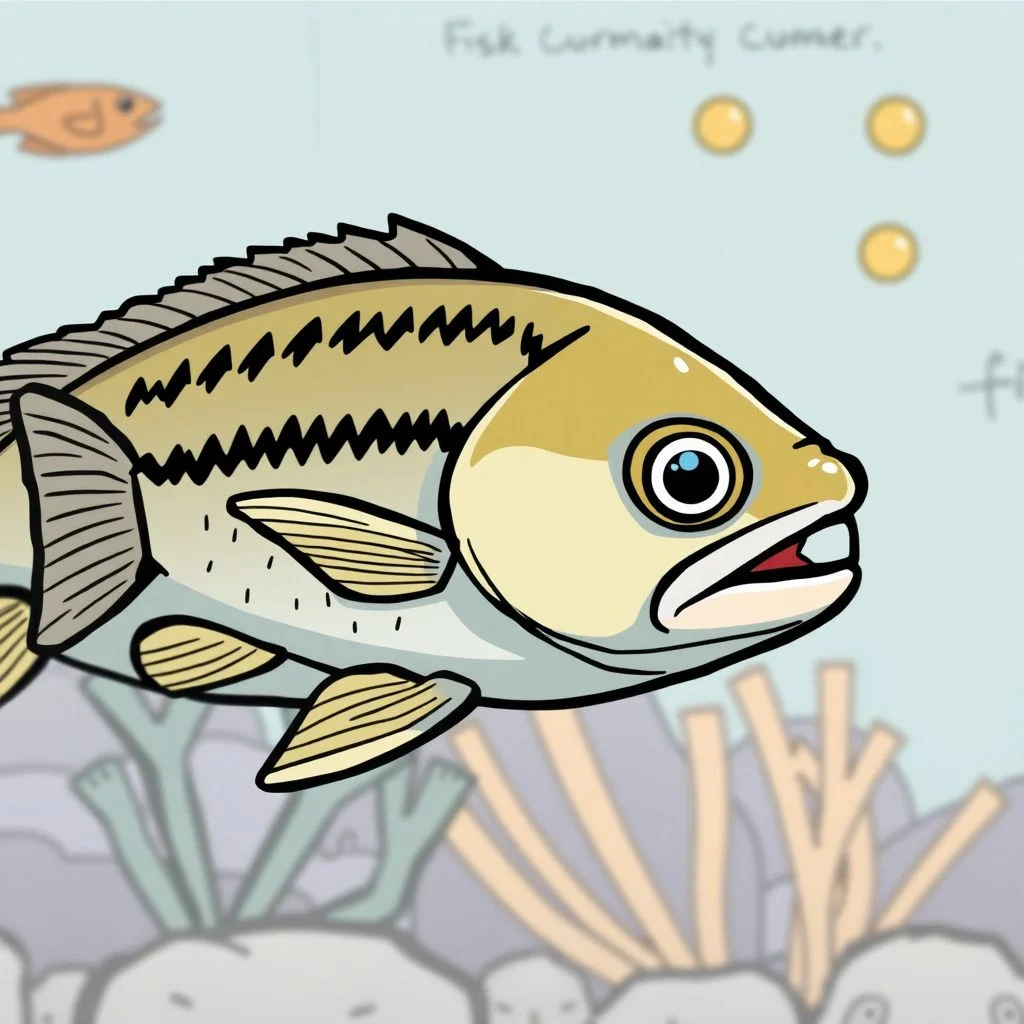
- Visual humor: Fish look funny. Their expressions are blank, their lips are weird, and they blow bubbles. That visual pairs perfectly with silly wordplay.
- Low stakes: Nobody gets offended by a fish pun. They are a safe, universal form of humor.
- Versatility: You can use them for birthdays, fishing trips, restaurant menus, or just to break the ice.
Pro Tip: The best fish puns are delivered with absolute confidence. If you hesitate, the joke sinks. If you commit, it swims.
The Different Schools of Fish Puns
Not all fish puns are created equal. Some are “fin” based, some are “scale” based, and some are just specific species names. Knowing the difference helps you pick the right one for the right situation.
Fin-tastic Wordplay (The Classics)
These are the bread and butter of the genre. They focus on the anatomy of the fish or the environment they live in.
- Fin: “This is fin-tastic,” “I’m having a fin-tastic day,” “You’re a true fin-omenon.”
- Scale: “That story seems a little fishy to me,” “Can you scale me a favor?”
- Gill: “You have gill-ty written all over your face,” “I’m gill-ty of loving you.”
- Water/Sea: “I’m feeling a bit under the sea,” “Water you doing later?”
Species-Specific Puns
This is where you get the most creative. Almost every fish name sounds like a word we already use.
| Fish Name | Pun Phrase | Meaning/Context |
|---|---|---|
| Cod | “Oh my cod!” | An expression of surprise. |
| Tuna | “What’s the tuna today?” | Asking about music or news. |
| Salmon | “Salmon said this before…” | A way to introduce a repeated statement. |
| Eel | “I’m feeling eel.” | Feeling sick or sad. |
| Perch | “Take a perch.” | Have a seat. |
| Bass | “Drop that bass.” | A music joke or a fishing joke. |
| Hake | “For goodness hake.” | An expression of frustration. |
| Plaice | “This is my happy plaice.” | Referring to a favorite location. |
| Herring | “I’m not herring you.” | Mishearing someone. |
| Skate | “See you later, skate.” | A goodbye. |
The “Dad Joke” Category
These are the puns that are so bad they are good. They often rely on a double meaning or a ridiculous setup.
- Why do fish live in saltwater? Because pepper makes them sneeze.
- What do you call a fish with no eyes? A fsh.
- Why are fish so smart? Because they live in schools.
- What is the richest fish in the world? A goldfish.
- How do fish get high? Seaweed.
Pro Tip: If you are telling a dad joke, the pause before the punchline is just as important as the punchline itself. Let the anticipation build for a second.
How to Use Fish Puns in Everyday Life
Knowing the puns is only half the battle. You need to know how to deploy them without getting thrown out of the room.
Social Media Captions
Fish puns are perfect for Instagram and TikTok. They are short, punchy, and look great next to a photo of the ocean or a plate of sushi.
- For a beach photo: “Feeling fin-tastic today.”
- For a sushi dinner: “This is soy good. Let’s roll.”
- For a bad day: “I’m feeling a bit crappie.”
- For a selfie: “Just a little salty today.”
Naming Pets or Objects
If you have a pet fish, a punny name is a requirement, not a suggestion.
- Betta: “Betta White,” “Betta Midler,” “Betta Watch Out.”
- Goldfish: “Goldie Hawn,” “James Pond,” “Swim Shady.”
- Catfish: “Whiskers,” “Purr-fect.”
Fishing Humor
Anglers have their own specific dialect of fish puns. These often involve the struggle of catching something or the size of the fish.
- “I’m a reel catch.”
- “This is off the hook.”
- “I’m hooked on you.”
- “That’s a crappie situation.”
Summary: Whether you are online or offline, there is a fish pun for the occasion. The key is matching the tone of the pun to the context of the conversation.
The Psychology Behind the Groan
Why do we groan at a good fish pun? It is not because we hate it. It is because the pun is so efficient that it bypasses our higher reasoning and hits the “cringe” center of the brain, which is often indistinguishable from the “humor” center.
A study on humor often points to the Benign Violation Theory. A joke is funny when it violates a norm (using a word wrong) but is benign (nobody gets hurt). A fish pun is the perfect example of a benign violation. You have broken the rules of grammar or pronunciation, but the result is harmless and cute.
Here is what happens in your brain:
- Recognition: You hear “fin-tastic” and recognize the word “fantastic.”
- Error detection: Your brain flags the “fin” as a mistake.
- Resolution: You realize it is a pun about fish.
- Reaction: You either laugh or groan. Both are signs the joke worked.
Summary: The groan is a sign of respect. It means the pun was clever enough to catch you off guard.
Crafting Your Own Original Fish Puns
You do not need to just copy the list above. You can create your own. The formula is simple.
Step 1: Find a Common Phrase
Think of phrases you use every day. “I need to go,” “That’s crazy,” “Let’s hang out.”
Step 2: Swap in a Fish Word
Look for words that sound similar to fish terms.
- “Go” becomes “Roe” (fish eggs). “I need to roe.”
- “Crazy” becomes “Crappie” (a type of fish). “That’s crappie.”
- “Hang out” becomes “Angle out” or “Cast out.”
Step 3: Test It Out Loud
If it sounds awkward, it is probably a bad pun. If it sounds slightly wrong but understandable, it is a great pun.
Here is a quick table to help you brainstorm:
| Common Word | Fish Substitute | Example Sentence |
|---|---|---|
| Fantastic | Fin-tastic | “This party is fin-tastic.” |
| Guilty | Gill-ty | “I feel gill-ty about eating sushi.” |
| Fine | Fin | “I’m doing fin, thanks.” |
| Please | Plaice | “Can I have some plaice and quiet?” |
| Tune | Tuna | “Let’s tuna into the news.” |
| Sell | Shell | “I need to shell my old boat.” |
Pro Tip: The best original puns are the ones that are so bad you have to think about them for a second. If someone says “I don’t get it,” wait five seconds. The realization is often better than an instant laugh.
Key Takeaways
- Fish puns are universal because they rely on common words like “fin,” “scale,” and “gill.”
- Species-specific puns (like “Oh my cod”) are the most recognizable and easiest to use in conversation.
- Dad jokes about fish often involve questions and answers, making them great for kids.
- The “groan” is a positive reaction; it means the wordplay successfully tricked the brain.
- You can create your own puns by swapping common words with similar-sounding fish terms.
Frequently Asked Questions About Fish Puns
Q: What is the most popular fish pun?
A: The most popular fish pun is likely “fin-tastic.” It is easy to understand, positive, and works in almost any situation where you would say “fantastic.” It has been used in marketing, greeting cards, and casual conversation for decades.
Q: How do you make a good fish pun?
A: To make a good fish pun, start with a common phrase or word. Then, replace a syllable or word with a fish-related term that sounds similar. For example, change “guilty” to “gill-ty” or “tune” to “tuna.” The key is that the original meaning must still be recognizable.
Q: What are some funny fish names?
A: Some funny fish names include “James Pond,” “Swim Shady,” “Fin Diesel,” “Gill Clinton,” and “Betta White.” These names work because they combine a famous person’s name with a fish or water term.
Q: Why do dads love fish puns so much?
A: Dads love fish puns because they are simple, clean, and require no setup. A dad can drop “Let minnow if you need anything” in the middle of a conversation and get a guaranteed reaction from the family. It is a low-effort, high-reward form of humor.
Q: Are there fish puns for specific holidays?
A: Yes. For Valentine’s Day, you can say “I’m hooked on you” or “You’re a reel catch.” For birthdays, “Have a fin-tastic birthday” works well. For Christmas, “Merry Fishmas” is a classic choice.
Q: What is a good fish pun for a fishing trip?
A: “This trip is off the hook” is a great pun for a fishing trip. You can also use “I’m a reel catch” or “Let’s get this party star-fish-ed.”
Q: Can fish puns be used in professional settings?
A: You should be careful with fish puns in professional settings. A light pun like “Let’s scale back this project” can work in a casual meeting, but heavy puns like “This is a crappie situation” might be seen as unprofessional. Read the room first.
Q: What is the difference between a fish pun and a fish joke?
A: A fish pun is a play on words, like “That’s fin-tastic.” A fish joke is a longer setup with a punchline, like “Why do fish live in saltwater? Because pepper makes them sneeze.” Both are forms of wordplay, but puns are generally shorter.
References & Further Reading
- Merriam-Webster Dictionary: Pun – A definition of puns and their linguistic history.
- Punpedia: Fish Puns – A large database of fish-related wordplay.
- The Pudding: The Structure of Puns – An analysis of how puns work structurally in language.
—
About This Article
This guide was written by a writer who has spent years studying wordplay and humor, and who has a particular fondness for the absurdity of ocean-themed jokes. The content is designed to be a practical resource for anyone looking to add a little levity to their day, backed by an understanding of linguistic patterns rather than just a random list of jokes.