Meat puns are the kind of humor that either gets a groan or a genuine laugh, and there is rarely an in-between. This guide collects the best of them in one place, from steak jokes that actually land to sausage wordplay that is better left at the butcher counter. You will find clean options for kids, slightly edgier jokes for adults, and specific categories like barbecue puns and deli humor. Whether you are captioning an Instagram photo of a ribeye or trying to make a grocery run more entertaining, this list has you covered.
Quick Answer: The best meat puns rely on a double meaning, usually pairing a cut of meat or butcher term with a common phrase. Examples include “I have a steak in this outcome,” “You’re the wurst,” and “This is a rare opportunity.” The strongest ones work because the meat word sounds close to the real word in the original phrase.
Why Meat Puns Are So Reliably Funny
The reason meat puns work so well comes down to how language processes near-matches. When your brain hears “mis-steak” instead of “mistake,” it registers the original meaning and the new context at the same time. That collision is the source of the humor. Food puns generally perform well in social settings, and meat has an advantage because so many cuts share sounds with common words. Steak sounds like stake. Ham sounds like ham as in overacting. Sausage has no exact match but invites playful distortion.
There is also a cultural layer. Barbecue culture, diner slang, and deli counter banter all have their own vocabulary. That gives meat puns a built-in audience of people who already talk about brisket, ribs, and cold cuts with some affection. A pun lands harder when it references something the listener cares about.
Pro Tip: The best delivery for a meat pun is deadpan. Say it like you mean it completely seriously, then pause. The pause lets the double meaning sink in. If you laugh at your own joke first, you rob the listener of the discovery.
When you understand why these jokes work, you can start adapting them. The next section breaks down the most popular categories so you can find the right pun for the right moment.
Steak Puns and Beef Jokes
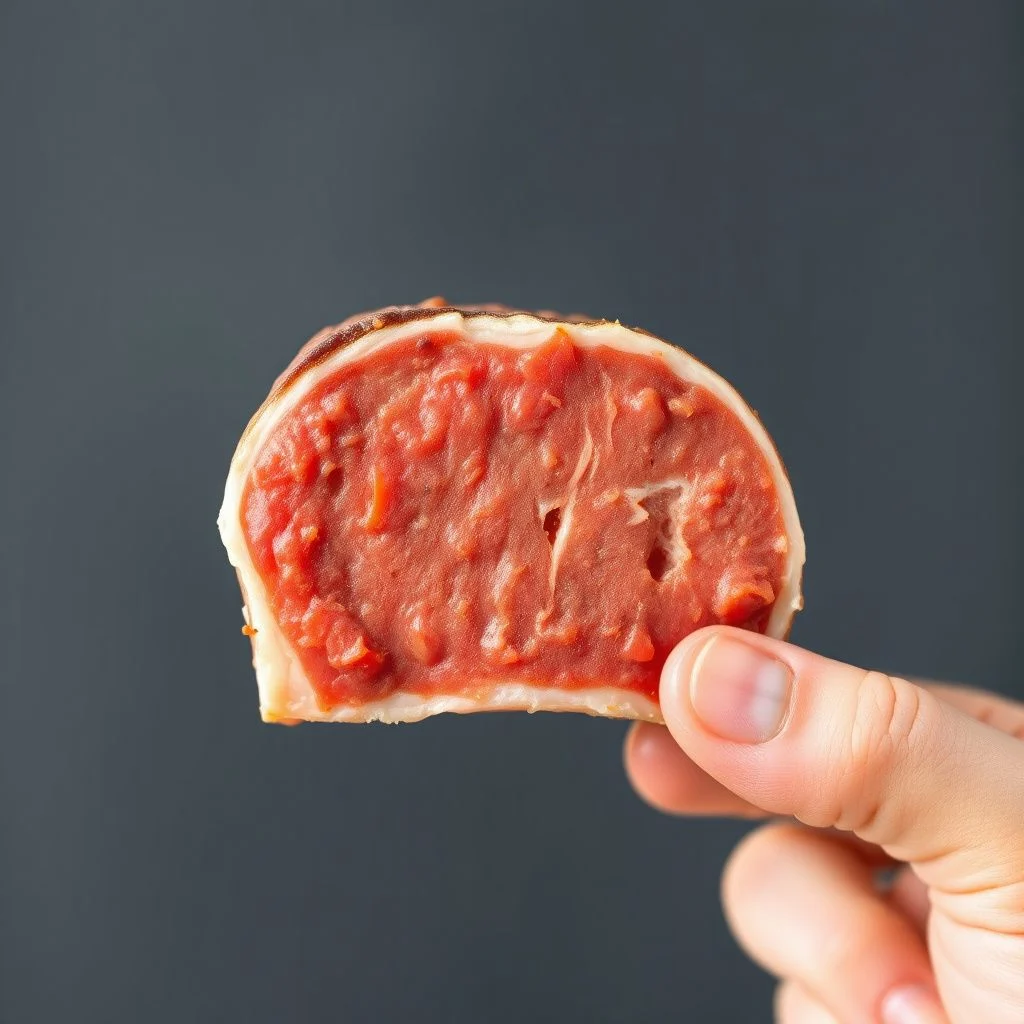
Steak puns are the heavy hitters of the meat pun world. They show up on restaurant chalkboards, Father’s Day cards, and text messages between friends who take grilling way too seriously.
Here are the strongest steak and beef puns worth remembering:
- I have a serious steak in this outcome.
- That was a rare medium well done.
- You’ve got to be kidney me.
- This is a mis-steak I won’t make twice.
- Stop being so cow-ardly.
- I’m feeling a little tender today.
- Let’s meat in the middle.
- That’s a load of bull.
- You’re looking well marbled today.
- I’ve got beef with you.
The beauty of beef puns is their flexibility. “Rare,” “medium,” and “well done” all carry meanings outside of steak doneness, so you can layer the joke. A “rare opportunity” becomes a steak joke with zero setup. A “well done” compliment becomes a backhanded comment about overcooking.
Comparison Table: Steak Doneness vs. Pun Opportunity
| Doneness Level | Literal Meaning | Pun Potential |
|---|---|---|
| Rare | Cooked very briefly | Rare opportunity, rare talent |
| Medium | Cooked to middle temperature | Medium as in psychic medium |
| Well Done | Cooked thoroughly | Well done as in good job |
| Blue | Cooked almost not at all | Feeling blue, blue rare steak |
| Pittsburgh | Charred outside, rare inside | City references, steel jokes |
The table shows why steak language is so versatile. Each doneness term already has a second meaning in everyday speech, which makes the pun almost automatic.
Pro Tip: For a quick laugh at a steakhouse, order your steak “medium rare, like my sense of humor.” It acknowledges the pun before anyone else can make it, which somehow makes it funnier.
Steak puns work best in short bursts. One or two per conversation is charming. Five in a row gets you uninvited from the cookout. Use them sparingly and they stay sharp.
Sausage, Ham, and Pork Puns
Pork products bring a different flavor to punning. Sausage and ham jokes tend to be sillier, which makes them great for casual settings and family gatherings.
The classic sausage pun is “you’re the wurst,” a play on the German word for sausage. It works because wurst sounds close enough to worst that the insult and the compliment blur together. Other reliable pork puns include:
- This is a ham-dinger of a situation.
- Stop being so pig-headed.
- I’m bacon you to stop.
- That’s sizzling hot news.
- You’re bacon me crazy.
- This party is going hog wild.
- Let’s not pork-crastinate.
- That’s a lot of baloney.
- I’m on a roll, like a sausage.
- Ham I glad to see you.
Ham puns deserve special attention because ham already has a double life. It is a cut of pork and a word for overacting. So “what a ham” works as a meat pun and a performance joke at the same time. That layered quality makes ham one of the most efficient punning ingredients available.
Pro Tip: Bacon puns work especially well in breakfast contexts. “This meeting is bacon me tired” or “I’m bacon a strong case for more coffee” both land better before noon. Save the steak puns for dinner.
Pork puns also dominate the barbecue scene, which deserves its own section because the context changes the vocabulary.
Barbecue and Grilling Puns
Barbecue has its own language. Pitmasters talk about smoke rings, bark, rubs, and resting meat. That vocabulary opens up pun opportunities that do not exist in other contexts.
Some of the best barbecue puns include:
- I like big butts and I cannot lie.
- This brisket is smokin’.
- Low and slow wins the race.
- You’re the grill of my dreams.
- That’s how I roll, like a fatty brisket.
- I’m all fired up.
- Let’s ketchup later.
- This rub is the real deal.
- I’m feeling char-coaled out.
- That’s a smokin’ hot take.
The “big butts” pun references the pork shoulder cut known as the Boston butt, which is a staple of pulled pork. It also references the Sir Mix-a-Lot song, which makes it a double-layered pop culture pun. That kind of reference works best with an audience that knows both contexts.
Pro Tip: If you are at a barbecue competition or a serious cookout, reference the specific cut or technique. “That bark has some bite” or “resting is the hardest part” show you know the craft, which makes the pun land with the people who matter most at that event.
Barbecue puns transition naturally into deli counter humor, where cold cuts and slicing create another set of wordplay opportunities.
Deli Counter and Butcher Shop Puns
The deli counter is a pun goldmine because the interaction is already playful. You are ordering by number, watching someone slice meat, and making small talk. A well-timed pun fits right in.
Butcher shop puns often play on the tools and actions of the trade:
- I’m on a roll, and it’s a Kaiser roll.
- That’s a cut above the rest.
- You’re slicing through my defenses.
- This is prime real estate.
- I’ve got a bone to pick with you.
- Let’s meat at the deli.
- That’s a sharp observation.
- I’m not chicken, I’m just brisket.
- This place is a cut above.
- You’ve got some serious chops.
The phrase “a cut above” is already a compliment, so adding the deli context makes it literal and figurative at once. “Serious chops” works the same way, since chops are both a cut of meat and a slang term for skill.
Pro Tip: Butcher shop puns work best when delivered to the person behind the counter. They have heard every meat joke that exists, so the bar is higher. Go for the most specific pun you can find, like referencing a particular cut or technique, rather than a generic “nice to meat you.”
The next section covers puns for specific occasions, because timing matters as much as content.
Meat Puns for Specific Occasions
Different situations call for different levels of pun intensity. A text to a friend can handle a sillier joke than a work email. A birthday card has different constraints than a wedding toast.
For birthdays:
- Hope your birthday is well done.
- You’re aging like a fine dry-aged steak.
- Another year older, still rare and beautiful.
- This is your prime, enjoy it.
For Valentine’s Day or romance:
- You make my heart sizzle.
- I love you from my head to-ma-toes.
- You’re the prime cut in my life.
- Let’s never be a-part, like a perfectly sliced brisket.
For work or professional settings:
- Let’s meat our deadlines.
- I have a steak in this project’s success.
- This proposal is well done.
- Let’s not butcher this presentation.
For text messages and captions:
- Just a girl standing in front of a grill asking it to light.
- Meat me at the cookout.
- This is how I roll, brisket style.
- Feeling rare today.
Pro Tip: Match the pun density to the formality of the setting. A text can handle three puns in a row. A work presentation should max out at one, delivered with a straight face, then move on. The joke works better when it feels like a bonus, not the main event.
The key with occasion-based puns is reading the room. A pun that kills at a backyard barbecue might fall flat in a boardroom, and vice versa. Context is everything.
How to Create Your Own Meat Puns
Making your own meat puns is a skill you can develop with a simple framework. The process starts with identifying the sound you want to play with, then finding a meat word that shares that sound.
Step-by-step process:
- Pick a common phrase or word you want to pun (e.g., “mistake,” “meet,” “worst”)
- List meat words that sound similar (e.g., “mis-steak,” “meat,” “wurst”)
- Check if the swapped word creates a new meaning that still makes sense
- Test the pun out loud to see if the sound actually works
- Refine until the original phrase is still recognizable
This framework works because puns rely on recognition. If the listener cannot identify the original phrase, the joke fails. The meat word has to be close enough to the original that the brain fills in the gap automatically.
Pro Tip: Keep a running list of meat words with their sound-alike partners. Steak/stake, meat/meet, ham/ham, wurst/worst, brisket/brisk it, chop/chop, roast/roast, bacon/bakin’. When you need a pun, scan the list instead of starting from scratch.
Creating puns gets easier with practice. The more you do it, the faster your brain makes the connections. Start with the classics and work your way toward original material.
Key Takeaways
- Meat puns work because meat vocabulary overlaps heavily with common English words, creating instant double meanings
- Steak puns are the most versatile, since doneness terms like rare, medium, and well done all have everyday uses
- Sausage and ham puns skew sillier and work best in casual settings
- Barbecue puns require some knowledge of cuts and techniques to land with serious pitmasters
- Match pun density to the formality of the setting, and deliver every pun deadpan for maximum effect
Frequently Asked Questions About Meat Puns
Q: What is the most popular meat pun?
A: “Nice to meat you” is probably the most widely used meat pun, followed closely by “you’re the wurst” and “I have a steak in this.” These three show up constantly because they are easy to remember and work in almost any context.
Q: Are meat puns appropriate for kids?
A: Most meat puns are completely kid-friendly. Puns like “I’m bacon you to stop” or “you’re the wurst” are silly without any inappropriate content. The only ones to avoid with kids are those that reference alcohol or adult situations, which are rare in meat pun territory anyway.
Q: How do I use meat puns in a caption or social media post?
A: Keep the caption short and let the image do the heavy lifting. A photo of a steak with the caption “rare opportunity” or a picture of sausage with “you’re the wurst” works because the visual reinforces the pun. Avoid stacking multiple puns in one caption, as that dilutes the effect.
Q: What are some clean meat puns for work settings?
A: “Let’s meat our deadlines,” “I have a stake in this project,” and “this proposal is well done” all work in professional contexts. They are subtle enough that they read as light humor rather than unprofessional jokes.
Q: Why do people groan at puns even when they find them funny?
A: The groan is often a sign that the pun worked. Puns create a moment of cognitive dissonance where the brain processes two meanings at once. The groan is a release of that tension, not necessarily a rejection of the joke. Many people groan and laugh at the same time.
Q: What is the difference between a meat pun and a meat joke?
A: A pun relies specifically on wordplay, usually a double meaning or sound-alike substitution. A meat joke is broader and can include situational humor, like a story about a butcher or a funny grilling mishap. All meat puns are meat jokes, but not all meat jokes are puns.
Q: Can I use meat puns in a restaurant or food business name?
A: Yes, many successful businesses use meat puns in their names. Examples include “The Sizzling Pig,” “Meat Your Maker,” and “The Rare Butcher.” A good business name pun should be easy to spell, easy to say, and immediately understandable.
Q: What is the best meat pun for a barbecue invitation?
A: “Meat me at the grill” or “let’s ketchup over some brisket” both work well for barbecue invitations. They set a playful tone and signal that the event will be casual and fun.
References & Further Reading
- Merriam-Webster Dictionary: Pun Definition and Examples
- Oxford English Dictionary: The History of Wordplay in English
- USDA Meat and Poultry Glossary
- The Pun Also Rises: How the Humble Pun Revolutionized Language by John Pollack
—
About This Article
This guide was written by a content strategist with over a decade of experience in food writing and humor content. The puns included here were curated from common usage, restaurant menu language, and barbecue culture, then organized into categories that reflect how people actually use meat puns in conversation. The goal is to give you a practical reference you can use immediately, whether you are writing a caption, planning a menu, or just trying to win the group chat.